
Style
Ketamine Powder vs PCP: Key Differences and Risks
Jul
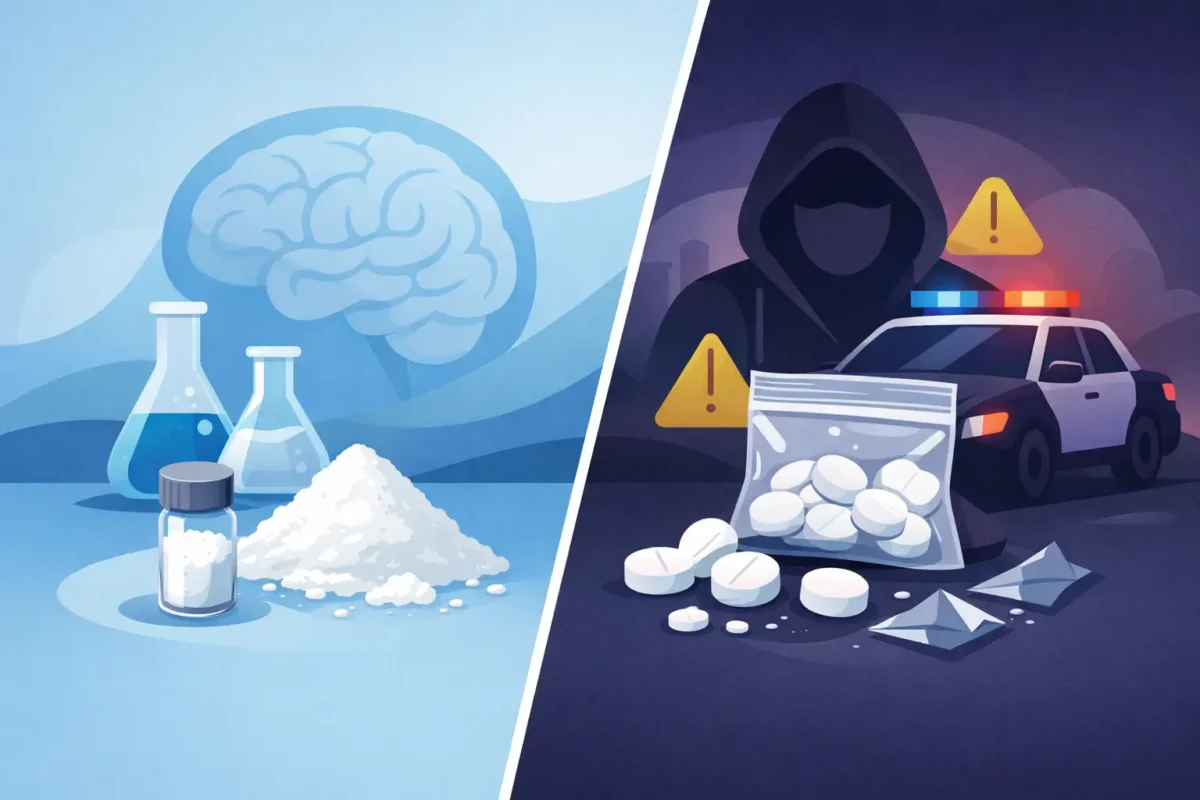
A bag labeled with a familiar drug name does not tell you what it contains, how potent it is, or how it will affect someone. That is the central issue in any discussion of ketamine powder vs PCP. Both are dissociative drugs, but treating them as substitutes can lead to severe medical, psychological, and legal consequences.
The direct answer is simple: ketamine and PCP are chemically related but meaningfully different substances with different clinical histories, duration profiles, and risk patterns. Neither should be treated as a casual consumer product, and an unlabeled or illegally sold powder adds a separate layer of uncertainty that no online claim, appearance, or packaging can remove.
Ketamine Powder vs PCP: The Core Difference
Ketamine is an anesthetic used in legitimate medical settings, including surgery, emergency medicine, and, under structured supervision, certain mental health treatments. PCP, short for phencyclidine, was also originally developed as an anesthetic but was discontinued for human medical use because its effects could be prolonged, unpredictable, and difficult to manage.
Both primarily affect NMDA receptors in the brain. That shared mechanism is why people often group them together as dissociatives. Dissociation can involve feeling detached from the body, surroundings, emotions, or sense of time. But a shared drug class does not mean a shared safety profile.
Ketamine’s medical use means clinicians understand how to monitor it in controlled environments. That does not make unsupervised ketamine use safe. PCP has no accepted routine medical role in the United States, and intoxication can be especially difficult to predict. Responses may range from confusion and panic to severe agitation, impaired judgment, dangerous behavior, or medical crisis.
The practical takeaway is not that one is a “safe version” of the other. It is that ketamine and PCP carry different risks, and neither can be reliably assessed by visual inspection, marketing language, or anecdotal reports.
Effects Can Overlap, but the Experience Is Not the Same
At a broad level, both substances may alter perception, coordination, memory, pain awareness, and a person’s sense of reality. People may appear detached, unsteady, confused, or unable to communicate clearly. The overlap ends there.
Ketamine effects are often described as more anesthetic and dreamlike. In medical contexts, its effects are managed with trained staff, known materials, and monitoring of breathing, blood pressure, consciousness, and recovery. Outside those settings, impairment can still be substantial. Falls, accidents, vomiting, panic, temporary memory gaps, and risky decisions are all possible.
PCP may produce a longer and more erratic course. Some people become withdrawn or catatonic, while others become highly distressed, disoriented, or agitated. The stereotype that PCP automatically causes violence is inaccurate and stigmatizing, but severe behavioral disturbance can occur, particularly when a person is frightened, confused, overheating, injured, or using multiple substances.
A person in a dissociative state may not recognize their own physical limits. They may continue moving despite injury, enter traffic, resist help because they misunderstand the situation, or become unable to protect their airway if they lose consciousness. The danger is not only the drug’s direct effect. It is the loss of judgment and awareness that can follow.
Powder Form Does Not Prove Identity or Purity
“Powder” describes a physical form, not a verified substance. White or off-white powder can be ketamine, PCP, another dissociative, a stimulant, an inactive filler, or a mixture. Color, texture, crystals, odor, and a seller’s assurance are not reliable identification methods.
This matters because misrepresentation changes the risk calculation completely. A person expecting one drug may encounter a far more potent compound, a combination of substances, or contamination. The danger rises further when alcohol, opioids, benzodiazepines, stimulants, or other psychoactive drugs are involved.
No one should rely on social media claims, product labels, or informal word-of-mouth to make a medical decision. If there is an exposure concern, the most useful information for emergency professionals is what is known, what is suspected, when symptoms started, and whether other substances may have been involved.
Key Risks of Ketamine and PCP
Ketamine can increase heart rate and blood pressure, impair coordination, and cause nausea, confusion, or frightening perceptual changes. Frequent or heavy nonmedical ketamine exposure has also been associated with serious bladder and urinary tract problems, including pain, urgency, and reduced bladder function. Cognitive and mood effects can become more noticeable with repeated use.
PCP can cause elevated blood pressure, rapid heart rate, impaired coordination, severe confusion, paranoia, agitation, and dangerous temperature elevation. Because PCP-related episodes may last longer than expected, someone can remain impaired well after the initial period of obvious intoxication. That extended impairment can complicate supervision and increase the chance of accidents.
For both drugs, mixing is a major red flag. Combining dissociatives with alcohol, opioids, sedatives, or other depressants can increase the risk of unconsciousness, vomiting, aspiration, and breathing problems. Combining them with stimulants can raise cardiovascular strain, anxiety, overheating, and agitation. There is no dependable way to make an unknown combination predictable.
Mental health history also matters. People with a history of psychosis, severe anxiety, bipolar disorder, trauma-related dissociation, or substance use disorder may face heightened risks. A distressing drug reaction is not always temporary or easy to shake off. It can expose or intensify underlying symptoms that require professional care.
When an Exposure Becomes an Emergency
Do not wait for a situation to become dramatic before seeking help. Call 911 or contact Poison Control at 1-800-222-1222 in the United States if someone has trouble breathing, cannot be awakened, has a seizure, collapses, has chest pain, becomes dangerously overheated, is severely confused, or may harm themselves or others.
If a person is awake but confused or panicked, reduce immediate hazards. Keep the environment quiet, move sharp objects and traffic risks away, use calm and simple language, and do not argue with delusional or fearful statements. Avoid crowding, restraining, or escalating the person unless there is immediate danger. Do not give them alcohol, additional drugs, food, or medication in an attempt to “balance out” the effects.
If the person becomes unconscious but is breathing, place them on their side if it is safe to do so and monitor them until help arrives. If they are not breathing normally, call 911 immediately and follow dispatcher instructions. Medical responders are there to address a health emergency, and accurate information can help them provide safer care.
The Legal and Medical Context
In the United States, ketamine is a Schedule III controlled substance. Its legitimate medical status does not make unauthorized possession, distribution, or nonmedical use legal. PCP is a Schedule II controlled substance and carries significant legal consequences. Laws vary internationally, but both substances are tightly controlled in many jurisdictions.
The more useful distinction is medical oversight. In a legitimate clinical setting, ketamine treatment involves screening, dosing decisions by qualified professionals, emergency protocols, and follow-up. That is fundamentally different from an unknown powder in an uncontrolled setting. Medical ketamine is not a blank check for self-treatment, and PCP is not a therapeutic substitute.
Anyone seeking relief from depression, trauma symptoms, chronic pain, or substance-related distress deserves options that do not depend on uncertainty or concealment. A licensed clinician can discuss evidence-based care, including whether supervised treatments are appropriate and legal for the individual’s health history.
A Clearer Standard Than “Which One Is Better?”
The question is not which powder sounds more familiar or which claim appears more convincing. The better question is whether the substance is known, whether the setting is safe, whether the person has relevant health risks, and whether help is available if something goes wrong.
With ketamine powder vs PCP, the safest choice is to avoid treating either as an interchangeable recreational or self-medication option. If you or someone close to you is already dealing with use, confusion, cravings, or a frightening reaction, reaching out to a medical professional, Poison Control, or a substance use support service is a practical next step, not a failure.
