
Style
How to Spot Fake Pharma Tablets Before Harm Hits
Jul
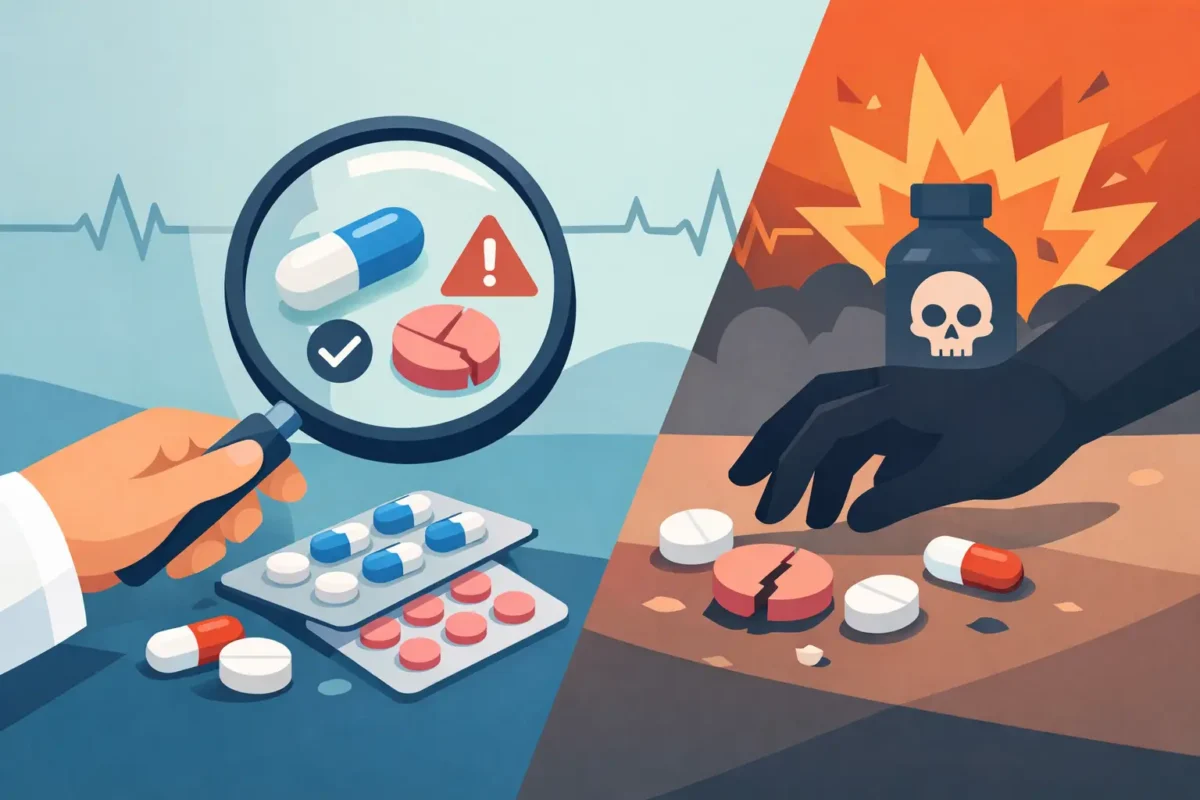
A tablet can look professionally made and still be dangerous. Learning how to spot fake pharma tablets can help you recognize warning signs, but visual checks alone cannot prove what a pill contains. Counterfeit tablets may contain the wrong drug, an unexpectedly high dose, no active ingredient, or potent substances that were never listed.
The safest decision is not to take a tablet that did not come from a licensed pharmacy in its original, verifiable dispensing container. If you already have a questionable pill, treat uncertainty as a real risk rather than something packaging or a familiar logo can solve.
Why counterfeit tablets are hard to recognize
Counterfeiters understand what buyers expect to see: familiar colors, score lines, imprints, blister packs, foil seals, labels, and branded bottles. Some copies are crude. Others are visually convincing enough to fool people who have handled legitimate medication for years.
That is why a pill’s appearance should be treated as a screening clue, not proof of identity. A round white tablet with a common imprint is not automatically authentic. The same is true for pressed bars, capsules, and tablets sold in loose bags or transferred containers.
The risk is especially serious with medications associated with sedation, pain relief, anxiety, sleep, or stimulation. Small differences in potency can produce major effects. A counterfeit tablet can also be unevenly mixed, meaning one piece may not contain the same amount of material as another.
How to spot fake pharma tablets: warning signs
Start with the source. Medication purchased through a licensed pharmacy and dispensed directly to the patient has a traceable chain of custody. A tablet offered loose, in a reused bottle, through social media, in an unmarked package, or by someone without pharmacy credentials carries a much higher counterfeit risk.
Next, examine the packaging as a whole. Look for misspellings, blurred printing, incorrect manufacturer information, mismatched lot or expiration numbers, broken seals, poor-quality foil, or labels that look copied rather than professionally printed. A bottle label that does not match the prescribing pharmacy, patient information, dosage, or medication description is a serious warning sign.
Then inspect the tablet under good light. Be alert to inconsistent color, chalky residue, rough edges, odd speckles, crooked scoring, shallow or distorted imprints, unusual shine, cracking, or a shape that differs from known pharmacy-dispensed tablets. Legitimate manufacturing can sometimes produce minor variation, so one cosmetic issue does not confirm a fake. Several inconsistencies together should stop you from using it.
Do not rely on taste, smell, or the way a pill dissolves. Those are unreliable and can expose you to unnecessary harm. Do not crush, split, heat, or otherwise alter an unknown tablet in an attempt to identify it.
Verify the details, not just the logo
A recognizable logo or imprint can be copied. Verification means checking whether all available details agree with each other: the exact imprint, shape, color, dosage strength, manufacturer, and packaging. A legitimate medication should have information that is internally consistent.
If the tablet was prescribed to you, compare it with the description on the pharmacy label and ask the dispensing pharmacy directly if a refill looks different. Pharmacies sometimes change manufacturers, so a different appearance does not automatically mean fraud. The pharmacist can explain a legitimate substitution and verify the correct imprint and product details.
If there is no prescription label, original container, or pharmacy record, there is no reliable consumer-level way to establish that a tablet is safe. A pill identifier can sometimes show whether a claimed imprint is plausible, but it cannot test the contents of the tablet in your hand. Counterfeit products may copy the imprint of a real medication exactly.
The limits of testing
Drug-checking tools can provide limited risk information, but they do not turn an unregulated tablet into a verified pharmaceutical product. Some tests can indicate the possible presence of certain substances. They may not identify every ingredient, measure potency, detect uneven distribution, or rule out contaminants.
This matters because counterfeit pills can contain multiple substances. A result that suggests one expected ingredient does not prove that nothing else is present. Home testing also depends on correct technique and interpretation, and false reassurance can be dangerous.
Laboratory analysis is more informative, but it may not be readily available or practical for every situation. For a medication you are supposed to take, the most dependable route is to contact the pharmacy or prescriber and obtain a replacement through legitimate medical channels.
When to stop and get help
Do not take a tablet if its origin is unclear, its packaging is suspicious, its appearance conflicts with the label, or it produces an unexpected effect. Set it aside where children, pets, and other people cannot access it. Do not give it to another person and do not sell or redistribute it.
If someone has already taken a suspected counterfeit tablet and becomes very sleepy, cannot stay awake, has slow or troubled breathing, turns pale or bluish, has chest pain, experiences seizures, becomes severely confused, or loses consciousness, call 911 immediately. Do not wait to see whether the symptoms pass.
If the person is awake and you are unsure about the level of risk, contact Poison Control at 1-800-222-1222 in the United States. Be honest about what was taken, when it was taken, and what symptoms are present. Medical responders need accurate information to provide appropriate care, not a perfect explanation of how the tablet was obtained.
Avoid mixing an unknown tablet with alcohol, opioids, benzodiazepines, sleep medications, stimulants, or other drugs. Combining substances can make an already uncertain situation much more dangerous, particularly when breathing, heart rate, blood pressure, or consciousness are affected.
A practical standard for safer decisions
The strongest counterfeit defense is simple: only use medication prescribed for you and dispensed by a licensed pharmacy. Keep it in the original container, check the label before each use, and ask a pharmacist when a refill changes appearance. That approach may feel less convenient than accepting a loose tablet with a convincing imprint, but convenience is not a meaningful safeguard when identity and dose are unknown.
Be especially skeptical of claims such as “pharmacy grade,” “lab tested,” “same as prescription,” or “guaranteed authentic” when they are not backed by a licensed pharmacy, valid prescription, and traceable dispensing record. Promotional language, polished packaging, and confident assurances are not quality controls.
If you are holding a pill you cannot verify, the useful next move is not a better guess. It is to keep it out of use, consult a pharmacist or poison specialist when appropriate, and replace needed medication through a legitimate source. A tablet is only worth taking when its identity is more than a claim.
